LENGTH
Shorter is higher
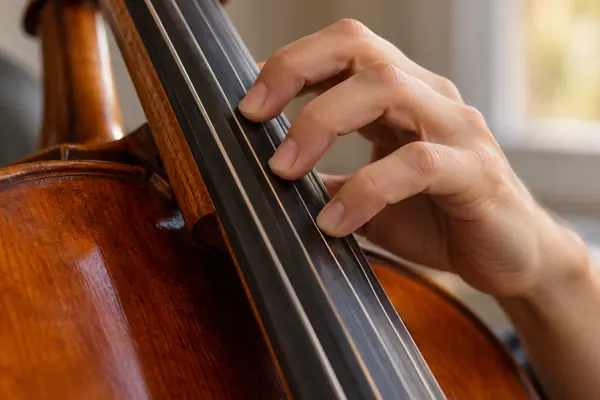
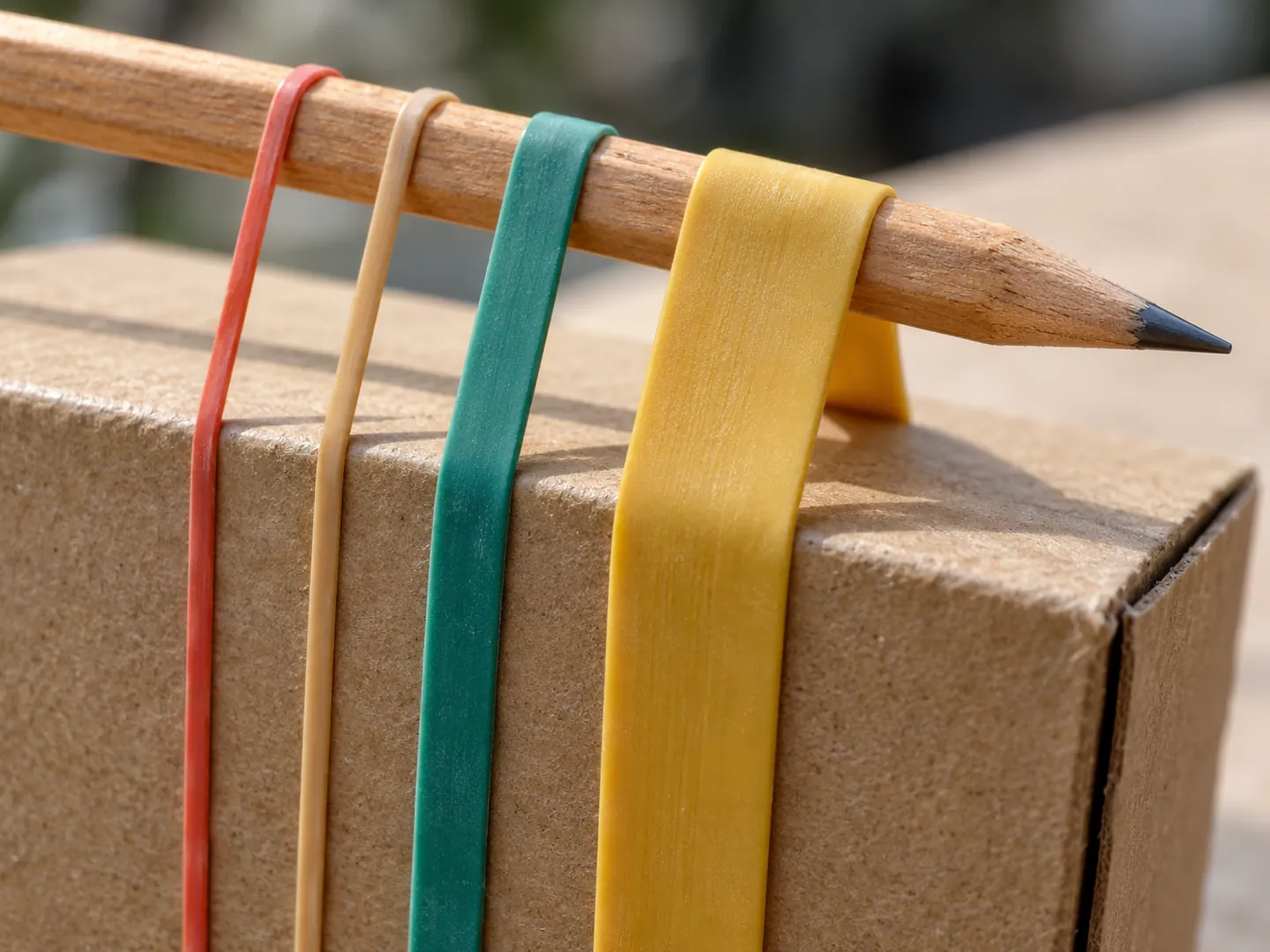
Pressing a string against a fingerboard shortens the part that vibrates and raises the pitch. On a rubber-band guitar, moving the bridge does the same.
Change a string soundboardkid
Start
A SOUND EXPERIMENT FOR KIDS
A shoebox and some elastic bands make a real string instrument.

Every string plays a note set by three things: how long the vibrating part is, how tight it is, and how heavy it is. A rubber-band guitar lets children hear all three, and it is just the kind of investigation England's Year 4 science curriculum suggests.
4× HEAVIERto sound an octave lower
Change a stringKeep in mind
THE SHORT ANSWER
Length, tension and weight.
Change one and the pitch moves.
LENGTH
Pressing a string against a fingerboard shortens the part that vibrates and raises the pitch. On a rubber-band guitar, moving the bridge does the same.
Change a stringTENSION AND WEIGHT
Tighter gives a higher pitch, which is how instruments are tuned. Thicker, heavier strings vibrate more slowly, so the low strings on a guitar are the fat ones.
See the numbersMAKE ONE
England's national curriculum suggests Year 4 pupils explore elastic bands of different thicknesses and make and play their own instruments.
Build itA QUICK STRING CHECK
Pick one change to a stretched elastic band or string. The bar shows where the note goes: down, about the same, or up.
Based on UNSW's physics of strings and Oak National Academy's Year 4 lesson on pitch. Results on a homemade instrument will be rough, which is part of the fun.
TWO NUMBERS WORTH KNOWING
One figure on string weight,
one on a real note.
4×
How much heavier a string must be to sound an octave lower
On guitars and violins the open length and tension are fairly similar for all strings. So to make a string an octave lower at the same length, its mass per unit length must be quadrupled.
STRING WEIGHT · UNSW
131Hz
The nominal frequency of the C below middle C
A string vibrates at a fundamental frequency f and also at 2f, 3f, 4f and so on, the harmonic series. UNSW uses C3, the C below middle C, as its example of a fundamental.
HARMONICS · UNSW
The rule behind it all: the note depends on the vibrating length and on the ratio of tension to mass per unit length. Shorter, tighter or lighter all push the note up.
MAKE A SHOEBOX GUITAR
An adult can help with the cutting. Use bands of several thicknesses so the differences are easy to hear.
Step 1
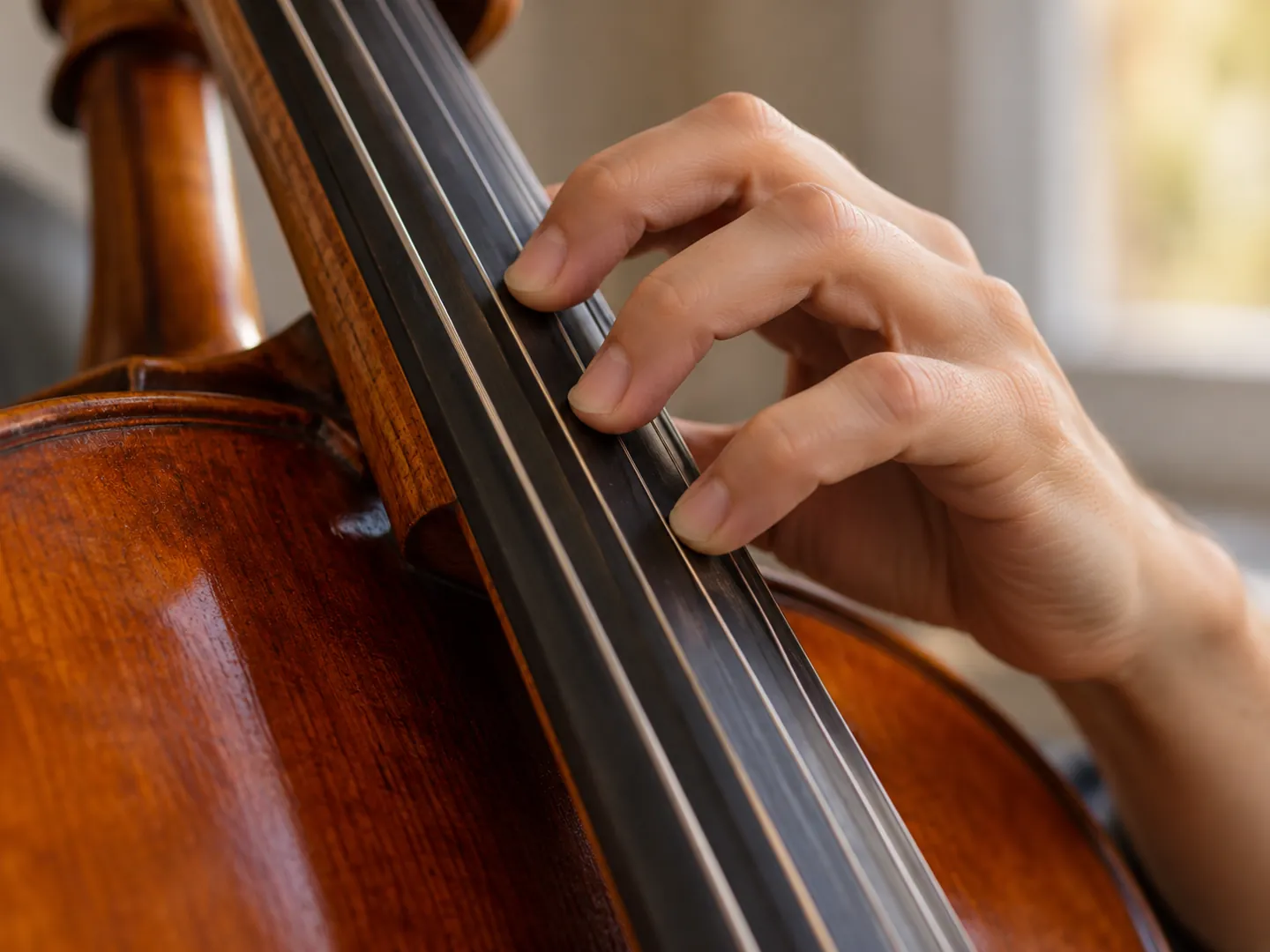
Stretch four or five elastic bands of different thicknesses lengthways around an open shoebox or a sturdy container.
Step 2
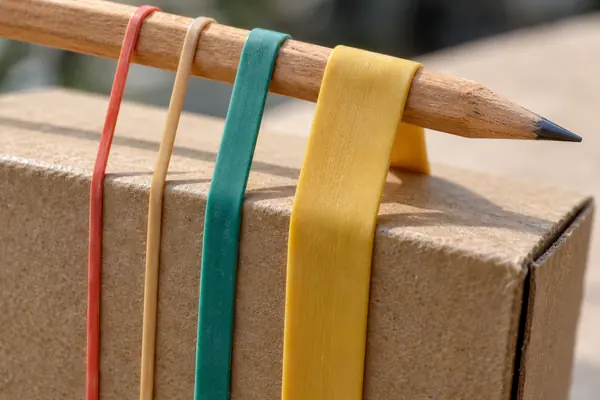
Slide a pencil under the bands near one end. It lifts them clear of the box and marks where each vibrating length begins.
Step 3
Pluck each band. Which is lowest? The curriculum asks children to find patterns between pitch and the object making it.
Step 4
Move the pencil to shorten the bands, or stretch one tighter. Change only one thing, then compare the notes.
WHY STRINGS SING
Pluck a string and a kink travels along it, reflects off each fixed end, and sets up a standing wave. The longest wave that fits is twice the string's length, which gives the lowest note, the fundamental.
The sharp kinks from a pluck fade quickly, which is why a guitar note becomes more mellow a second or more after you pluck it. A rubber band stretched over a shoebox follows the same rules.
Questions
A shorter vibrating length fits a shorter wave, which vibrates faster. Pressing a string against a fingerboard shortens it, which is how players raise the pitch.
Thicker, more massive strings vibrate more slowly. Because guitar strings have similar lengths and tensions, the low ones are made heavier instead.
It makes the sound louder, because a bigger vibration (a greater amplitude) gives a louder sound. The pitch is set by how often the string vibrates, its frequency, which depends on its length, tension and mass.
Sound is part of the Year 4 science programme of study in England. The curriculum suggests elastic bands of different thicknesses and making and playing instruments.
A string vibrates at its fundamental frequency and at whole-number multiples of it, such as 2, 3 and 4 times. Together these make the harmonic series, which shapes the sound of the note.
Destination
ABOUT THIS NAME
soundboardkid.com is part of the DoodleSale portfolio. It isn't in an auction right now, but you can ask about leasing it.